
POINPY
DevolverDigitalAction
4.9151.00 Reviews
- Version
- 1.1.17
- Installs
- 100.00K
- Age Rating
- Everyone
Screenshots

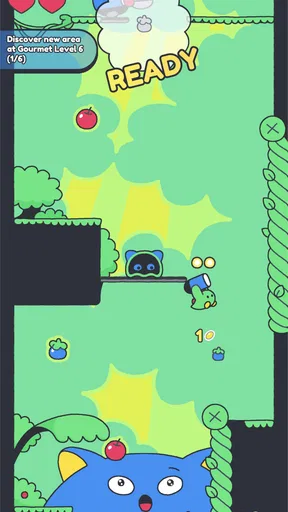
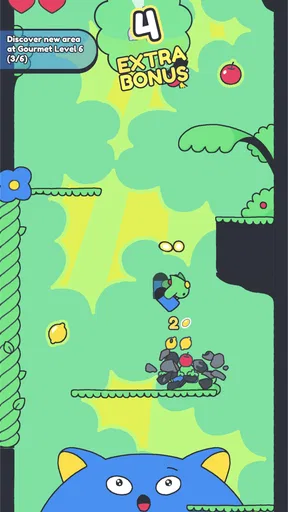
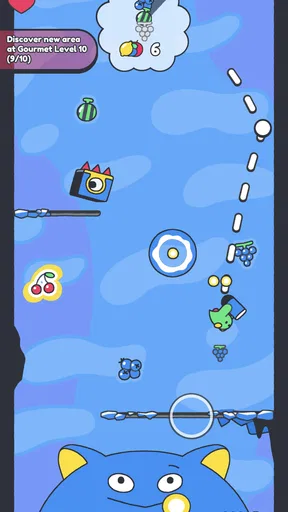
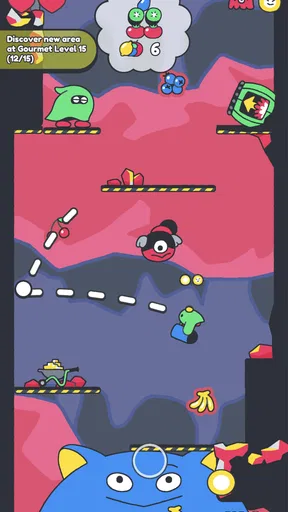
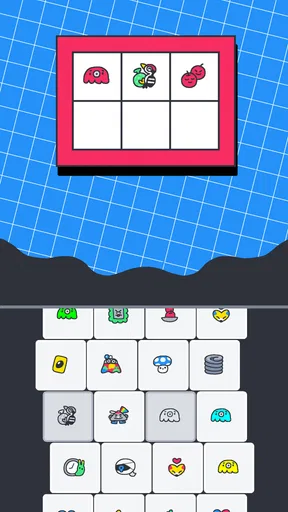
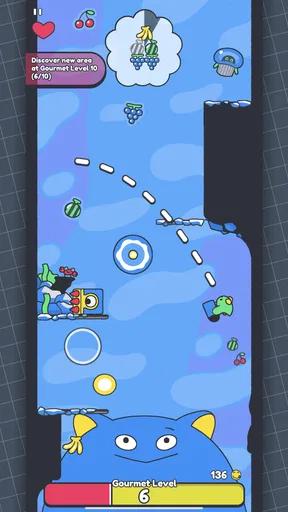
Our Review of POINPY
 Analysis by Appyee
POINPY is the kind of action game I can recommend when I want a quick challenge that demands attention immediately. Its central idea is easy to understand: I bounce upward, avoid dangerous obstacles, and keep moving while a blue creature follows close behind. What makes the experience work is the pressure created by that simple chase. There is no long explanation to get through before the game becomes interesting, and each attempt quickly becomes a test of timing, route choice, and nerve.
After spending time with it, my main impression is that this is not really a game about relaxing progress. It is about learning through repeated attempts. I fail, notice the mistake, adjust my movement, and try again with a slightly better understanding of the space. That loop is satisfying because the game keeps the objective readable even when the action becomes hectic. If you enjoy compact arcade-style challenges more than lengthy adventures, this free action game has a strong argument in its favor.
Why the chase feels so effective
The strongest part of POINPY is the way its movement and danger are tied together. Bouncing upward sounds harmless until the pursuing blue beast turns every pause, missed landing, or careless direction change into a problem. I am not simply climbing for the sake of reaching a higher point. I am making decisions under pressure, trying to gain height while keeping enough control to avoid enemies and hazards.
That pressure gives the game a distinctive rhythm. At first, I tend to react too quickly, especially when several threats appear close together. With practice, I start looking at the next safe opening instead of moving at the first possible moment. This is one of the less obvious pleasures of the design: the game gradually teaches patience without stopping to deliver a formal lesson. The chase itself becomes the teacher.
The store summary describes the basic action in a few words, but the practical experience is more nuanced. Feeding the blue creature is not just a side task that I can ignore while focusing on vertical movement. It helps shape the route I take and the risks I accept. I have to think about immediate survival and the larger path at the same time, which prevents the action from feeling like a simple automatic climb.
The best runs come from controlled movement rather than frantic movement. That sounds obvious, but the distinction matters here. When I rush because the pursuer is close, I often create the very mistake that ends the attempt. When I keep my attention on the next useful landing and treat each bounce as a decision, the game feels much more manageable. This makes it rewarding for players who enjoy improving their own technique rather than merely unlocking content.
A game built around readable short-term goals
One reason I found the game easy to return to is that every attempt gives me a clear immediate purpose. I can focus on surviving the next section, finding a safer route, gathering what is needed for the chase, or simply beating my previous performance. Those goals are small enough to understand during a busy day, but meaningful enough to make another attempt feel worthwhile.
This suits a realistic everyday situation. If I have a few minutes while waiting for an appointment or taking a break from work, I can start a run without committing to a long story sequence. The game still asks for concentration, so I would not play it while walking or during anything that requires my attention elsewhere, but it fits short sessions better than many action games that need a large uninterrupted block of time.
The compact structure also makes failure easier to accept. Losing does not feel like abandoning a huge investment of time. Instead, the failed attempt gives me information: I may have taken a risky route, mistimed a bounce, or focused too much on the pursuer and not enough on the next obstacle. That immediate feedback is a major strength, especially for players who like games where improvement comes from understanding rather than from simply becoming stronger through grinding.
Where the challenge becomes demanding
POINPY is forgiving in the sense that its objective is simple, but it is not necessarily gentle. The combination of upward movement, enemies, and pursuit can make the screen feel busy. I sometimes know what I want to do but execute it too late because several decisions arrive together. That is part of the appeal for experienced arcade players, yet it may frustrate anyone looking for a calm platforming experience.
The game also asks me to accept repetition. If I prefer a steady campaign in which each session reveals a new story beat, this may feel narrow. Its pleasure comes from refining performance and reacting more intelligently, not from constantly introducing a different type of activity. I would describe it as focused rather than broad, and that focus is either a strength or a limitation depending on what I expect from an action game.
Touch controls deserve particular attention before downloading. A game based on bouncing and dodging needs quick, predictable input, and any player who dislikes controlling fast action on a phone may find the experience less comfortable than a slower puzzle game. I have to keep my fingers positioned so that movement remains deliberate rather than accidental. On a larger screen, the action is easier for me to read; on a smaller phone, visual attention and hand placement matter more.
That does not make it unsuitable for mobile play. In fact, the short-attempt structure is a natural fit for phones. The trade-off is that convenience does not remove the need for focus. This is not something I would choose for passive play while listening to a podcast or watching television. The game works best when I give it my full attention for a few minutes.
Three practical habits that improve each attempt
My first useful habit was to stop treating every upward opening as an invitation to move immediately. I now wait for the safer line when the current position allows it. This reduces the number of desperate corrections and helps me preserve control for the next bounce. It is a small change, but it turns the game from a reaction test into a planning exercise.
Second, I pay attention to the relationship between the route and the blue beast rather than watching only my character. The pursuer changes the value of a landing. A position that looks safe for a moment may become a trap if it leaves me with no useful next move. Thinking one bounce ahead is more valuable than trying to travel as quickly as possible.
Third, I use unsuccessful runs as focused practice instead of immediately repeating the same pattern. If a particular obstacle catches me, I ask whether the real mistake happened earlier. Often the problem is not the final dodge but the route choice that left me arriving at the obstacle from a poor angle. This approach makes improvement feel more consistent and avoids the frustration of repeating a failed decision without understanding it.
These habits are not hidden buttons or complicated systems. They are ways of reading the game that become important once the basic controls are familiar. They also explain why the experience can hold attention despite its simple premise: there is a noticeable difference between merely playing another attempt and playing with a better plan.
How it compares with more familiar action games
Compared with a traditional platformer, POINPY feels less concerned with carefully exploring a fixed stage and more concerned with maintaining momentum under pressure. A conventional platform game may give me time to inspect a room, search for secrets, and approach an obstacle at my own pace. Here, the pursuing creature makes hesitation meaningful, so the game feels closer to an arcade survival climb than to a leisurely platforming adventure.
It also differs from endless runners. In a runner, the main challenge often comes from reacting to a predictable forward flow. POINPY gives the chase a more vertical and tactical character. I am not only avoiding what appears directly ahead; I am deciding how to use the available space while considering what the pursuit will do to my next choice. That extra layer makes it feel more deliberate than simply swiping around incoming barriers.
Players who usually choose action games with weapons, large maps, or long progression systems should set their expectations accordingly. This is a much more concentrated experience. Its appeal is not variety in the usual blockbuster sense. The appeal is the precision of its central idea and the satisfaction of turning a chaotic attempt into a controlled one.
What the free model means in practice
The game is free to download, which makes it easy to try without a financial commitment at the start. It includes optional in-app purchases ranging from around two dollars to around ten dollars per item. I would approach those purchases carefully and first decide whether the core loop itself keeps me interested. Since the main attraction is learning the movement and handling the chase, spending money will not replace the practice required to play better.
That pricing structure is worth considering for parents as well. The content rating is Everyone, so the tone is broadly accessible, but the presence of optional purchases still means I would check purchase settings before handing the device to a child. The age rating makes the game approachable for a wide audience, while the challenge level may still be more comfortable for players who enjoy repeated failure and gradual improvement.
DevolverDigital is the developer, and the game has attracted a strong response on the store, with an average rating of 4.9 from around 1.4 thousand ratings. It has also passed over 100 thousand installs. Those figures suggest that the compact arcade format has found an audience, although they should not be treated as a guarantee that every player will enjoy the pressure-heavy design. A high rating can tell me that the concept connects with many people; it cannot remove the question of whether I personally like this kind of repetition.
Compatibility, updates, and everyday usability
On the technical side, the game supports Android devices using version 5.0 or later. Its current version is 1.1.17, so I would check my device before downloading, particularly if I use an older phone. The release date shown for the game is July 17, 2026, which places it as a relatively recent addition for players discovering it now.
For everyday use, I would keep the game in the category of quick, intentional entertainment. It is a good choice when I want something I can understand quickly but still improve at over time. It is less suitable when I want a story to follow, a social experience, or a low-pressure activity that can run in the background.
I would also avoid judging it after only one short attempt. The first sessions can feel more awkward than enjoyable because I am still learning how the bounce, obstacles, and pursuit interact. Once I begin recognizing dangerous patterns and choosing routes earlier, the game becomes much more satisfying. The important question is not whether the first run feels effortless; it is whether I find the process of learning from that run enjoyable.
Who should play it, and who should skip it?
I think POINPY is a particularly good fit for players who enjoy arcade action, score-chasing, quick restarts, and movement that rewards precision. It suits someone who likes the feeling of saying, “I understand what went wrong; I can do better next time.” It is also a sensible pick for mobile players who want a game that can fit into short sessions without becoming disposable after a single play.
It may appeal to younger players because of its accessible rating and clear premise, but adults who enjoy demanding reflex games can find plenty to appreciate too. The bright pursuit-focused format makes the game easy to explain to a friend, while the challenge gives it more depth than the first description suggests.
I would skip it if I strongly dislike repeated attempts, pressure from a constantly approaching threat, or touch-based action that requires quick corrections. I would also choose another game if my priority is exploration, narrative, multiplayer interaction, or a broad collection of different modes. POINPY does not try to serve all of those needs, and its narrow focus is not something every player will want to overlook.
For someone unsure, my advice is simple: try a few serious attempts rather than judging the game by a distracted first session. Play with the sound and screen in a comfortable setup, concentrate on route selection, and notice whether failure teaches you something. If that learning loop feels satisfying, the free entry point makes the decision easy. If it feels repetitive instead, optional purchases are unlikely to change your opinion.
My final recommendation
POINPY succeeds because it builds a complete action experience around a small number of clear pressures. I bounce, I dodge, I manage the advancing blue beast, and I learn to make better decisions under stress. The design does not need a complicated premise to create tension. Its strongest moments come from the instant when I recognize a safer route just before the chase forces me to commit.
Its weaknesses are equally clear. The game can be demanding, touch controls may not suit everyone, and players looking for a long-form adventure will find the scope limited. The free model includes optional purchases, so I would keep spending controls in mind, especially on a shared device. None of these points undermines the core experience, but they define the audience quite sharply.
My verdict is positive: I recommend it to anyone who wants a focused mobile action game built around movement, pressure, and repeatable improvement. It is best enjoyed as a skill game, not as background entertainment. When I approach it with that expectation, each attempt has a purpose, and even a failure can feel useful. For players who prefer calm exploration or story-led progression, another option will be a better match. For arcade fans who want a quick game with a surprisingly demanding chase, this is an easy one to try.
Verdict
Strengths of POINPY
- Fast, satisfying platforming built for short play sessions.
- Colorful hand-drawn visuals give every run a distinctive style.
- Simple controls make it easy to start playing immediately.
- Power-ups add variety and encourage experimentation during runs.
- Offline play makes it convenient for travel or limited connections.
Limitations of POINPY
- Some runs can feel repetitive once the main mechanics become familiar.
- The difficulty may rise quickly for players seeking a relaxed experience.
- Limited customization may disappoint players who want deeper progression.
- Screen movement can occasionally feel hectic during intense sections.
- The game may offer less long-term variety than larger platforming titles.
Other Releases by DevolverDigital
View All


Similar Picks in This Category
View All
Temple Run 2: Endless Escape
Imangi Studios4.1

PUBG MOBILE
Level Infinite4.3

Free Fire: 9th Anniversary
GARENA INTERNATIONAL I4.4

Talking Tom: Hero Dash Run
Outfit7 Limited4.3

slither.io
Lowtech Studios3.9

Sniper 3D:Gun Shooting Games
Wildlife Studios4.6
Frequently Asked Questions
What is Poinpy, and what kind of game is it?
Poinpy is a colorful, fast-paced arcade game from the creators of Downwell. You control a small character who bounces upward through vertically scrolling levels while collecting fruit, completing challenges, and avoiding dangerous obstacles. Its simple one-touch-style controls are easy to understand, but the increasing speed, enemy patterns, and mission objectives give the game enough depth to keep experienced players engaged.
How does the gameplay and control system work in Poinpy?
Poinpy is built around launching and steering your character through the air. You swipe or drag to aim jumps, collect the required fruit, and land safely before continuing upward. The controls feel responsive and are designed for short mobile sessions, although mastering momentum and positioning takes practice. Players must balance exploration with careful movement because missing objectives or colliding with hazards can quickly end a run.
Is Poinpy free to download, and are there advertisements or in-app purchases?
Availability and pricing may depend on the platform and your region. Poinpy has been distributed as a premium mobile game through Netflix Games, meaning eligible Netflix subscribers can generally play it without separate advertisements or traditional in-game purchases. You may need an active Netflix membership and a compatible account to access it. Always check the current Google Play Store or App Store listing before downloading.
Does Poinpy require an internet connection or a Netflix subscription?
Poinpy is associated with Netflix Games, so players normally need to sign in with an eligible Netflix account to download or start the game. An internet connection may be required for authentication, installation, updates, or occasional account verification. After access has been confirmed, some gameplay may work offline, but this can vary by device and version. Check the store description for the latest requirements.
Is Poinpy suitable for children and casual players?
Poinpy is approachable for casual players because its basic controls can be learned quickly, and each attempt provides a clear opportunity to improve. However, the game becomes challenging as levels introduce faster movement, hazards, and more demanding objectives. Its bright cartoon presentation is generally family-friendly, but parents should review the current age rating, device requirements, and Netflix access rules before allowing younger children to play.
Play our best games!


